You are not buying area—you are buying a possible scenario
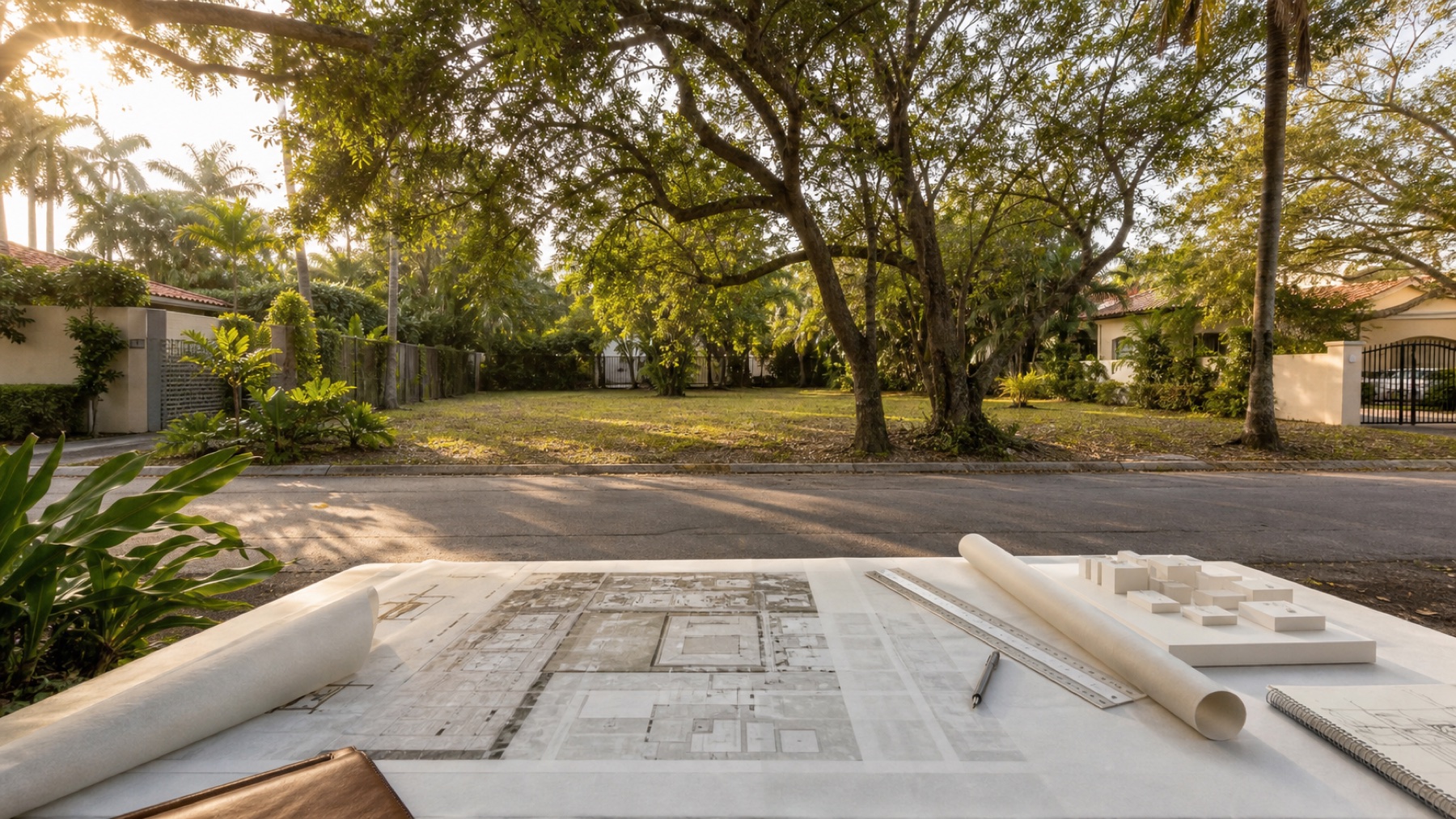
Two lots with similar dimensions can support very different outcomes. Shape, frontage, access, orientation, existing structures, trees, elevation, utilities and neighboring relationships affect both design and cost.
The search should begin with a product hypothesis: custom home, speculative residence, multiple units or an asset to hold. Without that hypothesis, it is easy to confuse available land with a development opportunity.
What can be observed before complex calculations begin
A visit and initial public information can reveal signals that require investigation: unclear access, meaningful trees, water, grade changes, apparent easements, neighboring buildings, traffic or a street scale inconsistent with the intended product.
These observations do not confirm feasibility, but they improve the questions and help discard options that would require a different strategy.
- Lot dimensions, shape and frontage
- Access, street and built context
- Vegetation, topography and visible drainage
- Utilities and existing conditions
- Demand and probable product scale
Regulations and technical conditions require formal verification
Zoning, use, density, setbacks, height, parking, easements, flood conditions and other requirements can change the scenario. Preliminary analysis organizes the decision; the relevant authority and qualified consultants must confirm what applies to a specific address.
Depending on the site and project, the process may also require a survey, geotechnical work, arborist, engineering, environmental review, utility coordination or other disciplines. Due diligence cannot remove every uncertainty, but it prevents an offer from resting on an unsupported image.
From site to product—and from product back to market
Preliminary massing only has value when connected to program, usable area, cost, financing, schedule, contingency and exit. Designing first and asking about the market later can produce an attractive project that does not support the investment.
As a Realtor and architect, I can integrate search, initial reading and product strategy. If development proceeds, Essence can provide the architecture and design team through a separate engagement, together with the engineers, consultants and verifications required for the project.
- Product and end user
- Probable area and spatial quality
- Acquisition, studies, design and construction
- Financing, time and contingency
- Rent, sale, custom use or hold
Updated: